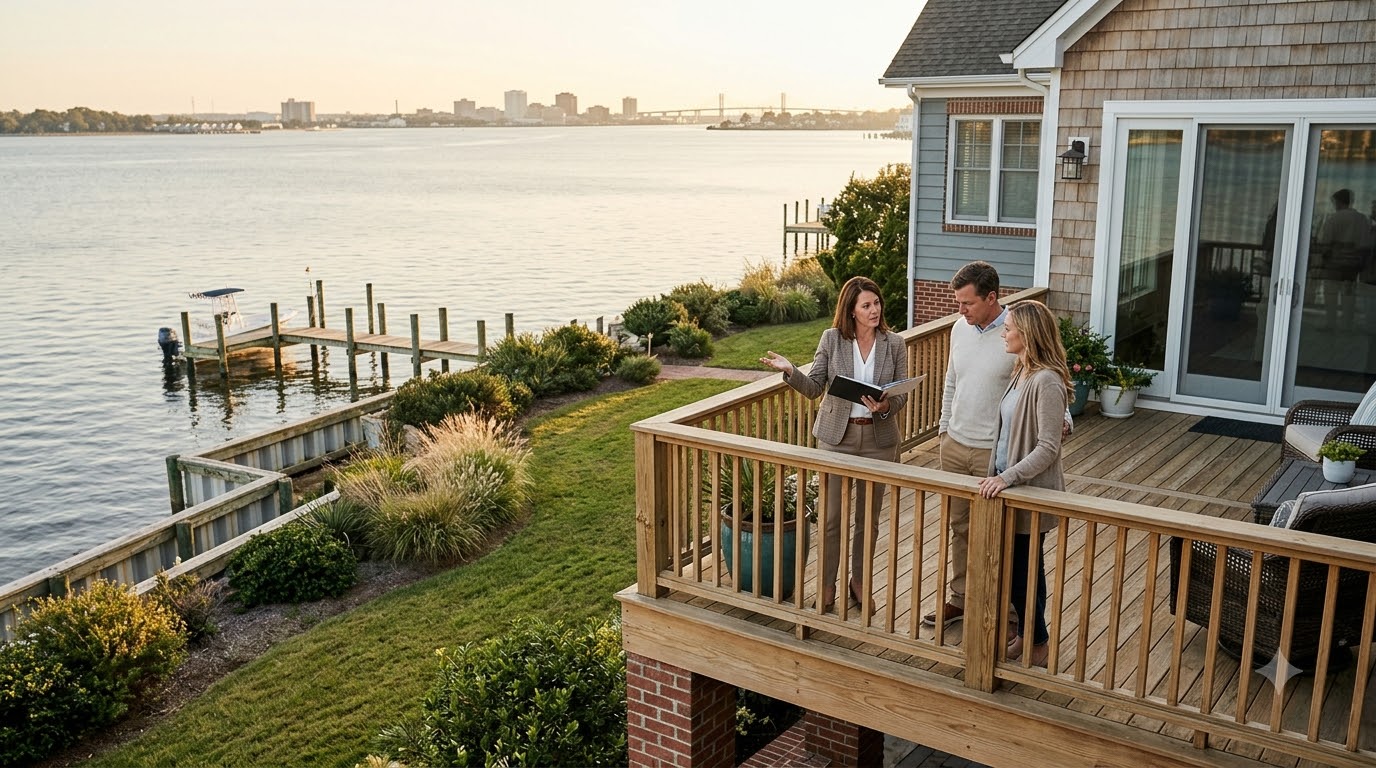
Sunrise over the water. A kayak at the dock. A porch built for slow evenings. That is the promise behind waterfront homes in Norfolk, VA, and it is a powerful one. But the same water also shapes the price, the insurance bill and the repair list. Buyers who understand all three before making an offer tend to buy smarter and sleep better. This guide covers flood zones, insurance, shorelines and the questions that protect your investment.
Quick takeaways
-
Check the flood zone, but do not stop there.
-
Get insurance quotes before your contract deadlines pass.
-
Inspect the shoreline structure as carefully as the house.
Why Flood Risk Comes First in Norfolk
Norfolk is low, flat and surrounded by tidal water. Storm surge can push water into neighborhoods fast. Meanwhile, the water level itself keeps creeping up.
NOAA's tide gauge at Sewells Point shows relative sea level rising about 4.84 millimeters per year from 1927 to 2024, or roughly 1.59 feet per century. Relative sea level includes both rising water and sinking land, and Hampton Roads experiences both. Even on sunny days, high tides can cover low-lying streets in some neighborhoods.
Decode the Flood Zone
FEMA maps show how likely a property is to flood. Here is what the main zones mean for you.
|
Zone |
Risk level |
Insurance note |
|
VE |
High risk, with wave action |
Required with a federally regulated lender |
|
AE |
High risk, 1% annual flood chance |
Required with a federally regulated lender |
|
Shaded X |
Moderate risk |
Not federally required, but recommended |
|
Unshaded X |
Minimal risk |
Optional, but flooding still happens |
High-risk zones carry at least a 1% annual flood chance, which federal lending rules translate to a 26% chance over a 30-year mortgage. A map is only a starting point. Homes outside high-risk zones can still flood, so research every address.
Flood Insurance: Plan the Cost Early
Flood insurance can add a meaningful cost to ownership. Keep these points in mind:
-
Standard homeowners policies generally exclude flood damage, so flood coverage is a separate policy.
-
National Flood Insurance Program policies usually have a 30-day waiting period, with some exceptions tied to loan closings.
-
NFIP residential coverage tops out at $250,000 for the building and $100,000 for contents.
-
Private flood policies may offer higher limits, so compare quotes.
-
FEMA's Risk Rating 2.0 prices policies using property-specific factors, including elevation, distance to water and rebuilding cost.
-
Coastal homeowners policies may carry a separate, higher deductible for named storms.
When buying a new home, request flood and homeowners insurance quotes before your due diligence period ends. Ask the seller for an elevation certificate, which documents the home's height compared to the base flood elevation.
Shorelines: What Holds the Water Back
The shoreline structure behind a home deserves close attention. Repairs can be costly, so learn its type and condition early.
|
Shoreline type |
How it works |
What to check |
|
Bulkhead |
Vertical wall holds soil in place |
Leaning, rot, rust, gaps and sinkholes behind it |
|
Riprap |
Stone layers absorb wave energy |
Shifted or sunken stones, exposed soil |
|
Living shoreline |
Marsh plants and sills soften waves |
Plant health, sill condition, permit records |
Virginia policy favors living shorelines for erosion control along tidal waters. Work on a shoreline, dock or pier often needs approval from the local wetlands board, the Virginia Marine Resources Commission or the Army Corps of Engineers. Ask the seller for permits and repair records for every structure.
Look Beyond the Standard Inspection
A waterfront home inspection should go further than a standard walkthrough. Consider adding specialists and checking these items:
-
Water lines, stains or musty odors in crawl spaces and lower walls.
-
Flood vents, drainage, grading and sump pump performance.
-
Height of the HVAC unit, water heater and electrical panel.
-
Bulkhead, dock and piling condition, ideally reviewed by a marine contractor.
-
Salt-air corrosion, wood rot and pest damage.
-
Roof, windows and doors for wind-driven rain damage.
Norfolk's Long-Term Flood Plan
The City of Norfolk and the U.S. Army Corps of Engineers are advancing a multi-year coastal storm risk program called Norfolk Coastal Storm Risk Management (CSRM) Project. It includes floodwalls, storm surge barriers, tide gates and pump stations, plus home elevation options for some properties.
Protection will arrive in phases, so not every neighborhood benefits at the same time. Ask the city how your target address fits into the plan. Check current project maps, because designs and timelines continue to change.
Think About Resale Now
Most owners sell eventually, so weigh resale from day one. A home selling agent can explain how flood zone, elevation, and shoreline condition influence buyer demand and price. Documented repairs, current permits, and an elevation certificate can make a future sale smoother.
Questions to Ask Before You Offer
Put these questions to the seller before you submit an offer:
-
Has the home ever flooded, and was an insurance claim filed?
-
What is the current flood insurance premium?
-
Is an elevation certificate available?
-
How old is the bulkhead, and who built it?
-
Which permits and repairs are documented for the dock and shoreline?
-
Has the home had mold, water intrusion or drainage problems?
-
Which flood or tide issues affect street access during storms?
The Bottom Line
Flood risk, insurance and shorelines are all manageable when you plan for them early. A knowledgeable home buying realtor can help you compare properties, gather records and avoid surprises.
Ready to Explore the Water Side of Norfolk?
Buying near the water takes local knowledge, patience and the right questions. At Coastal View Realty, we work as your Norfolk, VA home buying realtor from your first search through closing. Our office sits just one block from Ocean View and East Beach, so we know these neighborhoods firsthand. We also offer live MLS search, local tours and home valuations for sellers.
Call us at (757) 720-2327 or schedule a consultation today, and let us help you find the right waterfront property with confidence.
Frequently Asked Questions
Do I need flood insurance for a waterfront property in Norfolk?
Your lender requires it if the home sits in a FEMA high-risk zone and the loan comes from a federally regulated lender. Some lenders also set their own flood insurance requirements, even outside those zones, so confirm this with your lender early. Where coverage is not required, buying flood insurance may still be advisable, because standard homeowners policies exclude flood damage.
How do I find a property's flood zone?
Search the address on FEMA's Flood Map Service Center, or ask your lender for a flood zone determination. The City of Norfolk can also confirm mapped zones and explain local floodplain rules for specific addresses.
What is an elevation certificate?
It is a FEMA form completed by a licensed surveyor or engineer. It records a building's elevation relative to the base flood elevation, which helps insurers estimate flood risk and price coverage accurately.
Can a home outside a high-risk zone still flood?
Yes. FEMA notes that flooding can occur in moderate and minimal risk areas as well. Heavy rain, clogged drains and tidal surge can reach homes that maps label as lower risk.
How long before a flood policy takes effect?
Most National Flood Insurance Program policies take effect after a 30-day waiting period. Exceptions apply when coverage is purchased in connection with a loan closing, so start shopping early in your contract period.