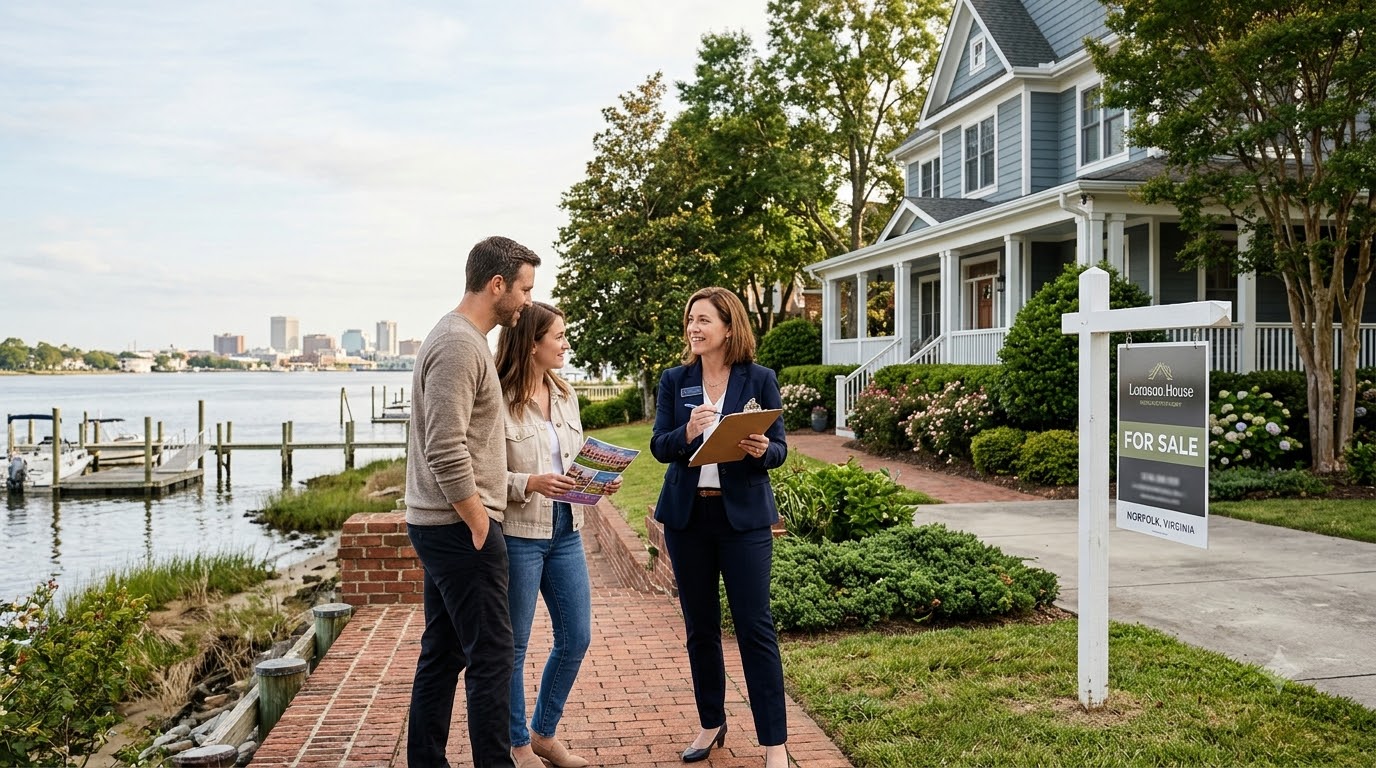
Ask ten people what a Norfolk home is worth, and you will get ten answers. Ask which agent to trust, and the answers split even further. That is because Norfolk is not one market. Ocean View, Ghent, Larchmont, and East Beach each move at their own pace. Flood zones, Navy orders, and century-old floor plans change the rules from block to block.
A weak agent can overpay for you, underprice you, or miss a flood-insurance surprise until it is too late. The right one sees it coming.
Here is how to choose one, starting with why the right agent matters so much in this city.
Why Your Choice Matters More Here
A citywide number hides a lot. The U.S. Census Bureau’s Quick Facts estimates that 46.3% of Norfolk housing units are owner-occupied, and the median owner-occupied home is worth $289,900 (2020–2024). Values swing widely by neighborhood, so a median tells you little about the street you want. Your agent should turn that number into block-level advice.
Step 1: Decide What Kind of Help You Need
Start with your goal. Different goals call for different strengths.
-
First-time buyer: Look for patient explanations, lender introductions, and clear next steps.
-
Buyer using VA financing: Choose someone who has closed VA loans and understands military timelines.
-
Seller: Look for strong pricing, marketing, and negotiation skills.
-
Investor: Find an agent who can judge rental income and as-is properties.
Not sure what an agent does at each stage? This breakdown of the benefits of working with a real estate agent walks through every step.
Step 2: Verify the License and Track Record
Whether you are buying a home or selling one, start with the license. Virginia’s Department of Professional and Occupational Regulation offers a public License Lookup tool to confirm a real estate licensee’s status and firm affiliation. Then ask for proof of recent Norfolk sales.
Check three things:
-
An active license in good standing
-
Sales in your target neighborhood, not just anywhere in Hampton Roads
-
Recent reviews that describe how problems were handled
Expert tip: Ask for two recent Norfolk clients as references. A five-minute call reveals more than a star rating.
Step 3: Test Their Local Knowledge
Generic advice stops at “hire someone local.” Use these questions to find real local depth.
|
Ask this |
A strong answer |
A red flag |
|
Which neighborhoods did you close in last year? |
Names areas and recent addresses |
“I work all over Hampton Roads.” |
|
How do you check flood risk? |
Reviews FEMA flood maps and raises insurance costs early |
Says it is never a problem |
|
What have you handled with VA loans or military moves? |
Explains timelines and VA financing basics |
Has no experience |
|
How do you approach older or historic homes? |
Pushes for a full inspection of roof, plumbing, and electrical |
Treats inspections as optional |
|
How will we communicate? |
Names a channel and a response time |
Stays vague |
Why Flood Questions Come First
Norfolk is surrounded by tidal water, so flood risk is an important consideration when purchasing property. FEMA flood maps show a property’s flood zone. Insurance requirements can differ from one address to the next. A strong agent raises this early, so a surprise premium never derails your offer. Ask them to walk you through a recent example.
Know the Neighborhoods They Should Know
Ask each agent which of these areas they know best, and why.
|
Area |
What it offers |
|
Ocean View |
Waterfront living on the Chesapeake Bay, with beach access and marinas |
|
Ghent |
Historic, walkable streets with local dining and cultural energy |
|
Larchmont and Edgewater |
Established residential areas known for stability and long-term value |
|
East Beach |
A newer planned community with coastal charm near the water |
|
Downtown Norfolk |
Urban condos, waterfront views, and easy access to employers |
Relocating or Moving on Orders?
Norfolk’s strong military presence means many buyers move on short notice. If that is you, add a few extra questions. Can the agent run live video tours and share detailed walkthroughs? Will they coordinate with your lender remotely? How do they adjust if your orders change mid-search? Clear answers here save weeks of stress.
Step 4: Match the Agent to Your Goal
If You Are Buying
The best fit is a real estate agent for local home searches in the neighborhoods you like. Ask how they track new homes for sale. Saved searches and instant alerts help in tight pockets, where good homes move fast. Then ask these questions:
-
How quickly can you tour a new listing?
-
Which lenders and inspectors do you trust, and why?
-
Have you helped buyers with waterfront or new construction homes?
-
Can you explain your fee terms in writing before we tour?
-
How would you handle two offers on one home?
A good agent also explains flood insurance and inspection steps before you make an offer, not after.
Expert tip: Their answer to the last question shows their negotiation style before you ever make an offer. Listen for specifics, not confidence alone.
If You Are Selling
A strong home selling agent in Norfolk, VA shows their pricing logic before you sign. Ask for recent comparable sales, a marketing plan, and a timeline in writing. Ask how often they will update you on showings and feedback. Test their number against a quick, commitment-free home value estimate.
Prefer speed over top price? A cash sale is another route. It can mean selling as-is, with no repairs, fees, or commissions. Compare that offer against a full listing. Whichever route you choose, ask each agent to explain expected costs and timelines in plain numbers.
Step 5: Interview Three Agents and Score Them
Meet three agents before you commit. Score each from one to five on local knowledge, communication, strategy, and trust. Compare the totals. Fit matters, because you will talk often for weeks.
Expert tip: Score each agent right after the meeting, while the details are fresh. Memory fades fast, and a polished pitch can blur the facts.
What a Good First Meeting Looks Like
A good first meeting feels like a conversation, not a sales pitch. A realtor for new home buyers should also explain each stage in plain language. The agent should:
-
Ask about your timeline, budget, and must-haves before talking about themselves
-
Explain the process from first step to closing day
-
Share local data, such as recent sales near your target streets
-
Answer hard questions plainly, including what they do not know yet
What to Put in Writing Before You Sign
Clear terms protect both sides. Before you sign anything, confirm these points in writing:
-
What services the agent will provide
-
How and when the agent is paid
-
How long the agreement lasts
-
How you can cancel if expectations are not met
-
Which areas the agreement covers
Walk Away If an Agent
-
Promises a price far above every other estimate
-
Pressures you to decide fast
-
Dodges questions about fees or contracts
-
Cannot name recent Norfolk sales
-
Takes days to return a call
Common Mistakes to Avoid
Even careful people slip here. Watch for these missteps:
-
Hiring a friend or relative without interviewing anyone else
-
Choosing the lowest fee instead of the strongest plan
-
Skipping reference calls because the reviews look good
-
Picking an agent who rarely works in your neighborhood
-
Signing before you understand the cancellation terms
A rushed choice is the costliest one. Take a week, compare your scores, and decide with a clear head.
The Bottom Line
The right agent knows Norfolk street by street, explains every step, and puts terms in writing. Use the license check, the local-knowledge questions, and the scorecard to find that person. Then trust the match.
At Coastal View Realty, we work as your Norfolk, VA home-buying realtor and your listing partner. We guide buyers, sellers, investors, and military families from first search to closing. Our site offers live listings and a quick home value estimate, and we also buy houses for cash. Ready to talk? Call us at (757) 720-2327 or browse our Norfolk listings today.
Frequently Asked Questions
How do I check whether an agent is licensed?
Use the Virginia Department of Professional and Occupational Regulation’s online License Lookup. Search the agent’s name, confirm the license is active, and note the firm listed. If the name does not appear, ask the agent to explain.
Is a big-name agent better than a local specialist?
Not necessarily. Norfolk neighborhoods price differently, so recent sales on your target streets matter more than brand recognition. Ask each agent for specific local examples and compare them, whatever the size of the team.
How much does a buyer’s agent cost in Norfolk?
Compensation is negotiable and set by agreement, so there is no single fixed rate. Buyers working with an agent generally must sign a written agreement before touring homes together. This agreement should explain the agent’s services, compensation, and terms. Depending on negotiations, the buyer, seller, or another party may cover the agent’s compensation.
How can I estimate my home’s value before meeting agents?
Start with a quick online estimate, then compare it with recent nearby sales. Treat it as a starting point. A good agent will explain any gap between the estimate and their pricing advice.
What should I ask an agent about flood risk in Norfolk?
Ask how they check a property’s FEMA flood zone and when they raise insurance costs. A strong agent brings it up before you write an offer, so premiums never surprise you at closing.